


Hidden Hazards in Old Buildings: What to Check for Before Building Demolition
Old buildings often hold more than history behind their walls. If you're preparing for a building demolition project, especially on a property that's been around for decades, there are critical risks you need to uncover before anything comes down. Toxic materials, hidden structural weaknesses, and outdated utility systems can all turn a simple teardown into a costly and dangerous mess.
Skipping hazard checks isn’t just risky but can also halt a project, expose workers to serious health threats, and leave you buried in legal trouble. This guide walks through the most important checks to perform before any demolition begins, helping you save time, money, and headaches down the line.
Pre-Demolition Hazard Checklist for Older Structures
Asbestos-Containing Materials (ACMs)
Asbestos is still one of the biggest concerns during any building demolition, particularly when dealing with structures built before the 1990s. Commonly used in insulation, vinyl floor tiles, ceiling finishes, pipe wrap, and roof shingles, asbestos only becomes more dangerous with age and disruption.
Once disturbed, asbestos releases microscopic fibres into the air. Breathing in these fibres can cause long-term respiratory illnesses, including mesothelioma and lung cancer. Proper asbestos removal is not optional: it's legally required, and must be handled by certified professionals who follow strict containment and disposal protocols.
Cutting corners during asbestos removal can lead to site contamination, regulatory penalties, and serious health risks for crews and nearby residents.
Lead-Based Paint
Lead paint is another hazardous material often found in older buildings, particularly those built before 1990. While it may be sealed under newer coats of paint, demolition work will expose and disturb it, turning the lead dust into an airborne health threat.
Before demolition, buildings should be tested for the presence of lead paint using professional lab sampling. If found, it must be removed or properly encapsulated using approved safety methods. Direct contact with lead paint dust can cause neurological damage, especially in children and pregnant individuals.
Failing to follow proper removal procedures doesn’t just put workers at risk—it can leave the property owner liable for environmental violations or harm to adjacent properties.
Mold and Moisture Damage
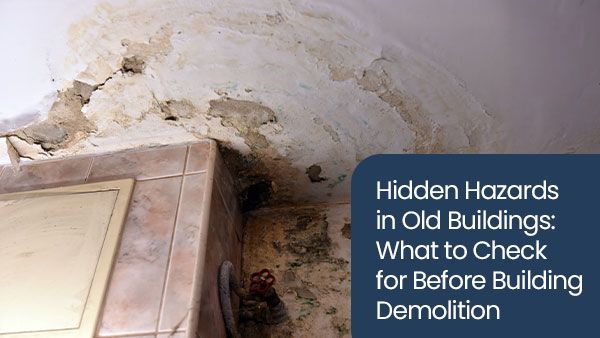
Mold thrives in hidden corners, especially in buildings that have experienced leaks, poor ventilation, or flooding. Areas like basements, behind drywall, under flooring, or around plumbing fixtures are hotspots for microbial growth.
During building demolition, mold spores can become airborne and spread quickly, causing respiratory irritation, allergic reactions, and other health issues. Mold can also linger in debris and impact the surrounding air quality if not handled correctly.
A full visual and moisture inspection before demolition is the best way to identify mold. If significant mold is present, remediation should occur before the structure is disturbed.
Structural Instability
Old buildings may not show their weaknesses until it’s too late. Cracked joists, rotting beams, sinking foundations, or water-damaged framing can make the structure unsafe to tear down using heavy equipment.
A structural engineer should evaluate the building’s integrity before demolition begins. This assessment helps avoid unexpected collapses during manual stripping or machinery operation. It also ensures that demolition crews can enter the space safely for interior work.
Ignoring structural instability can result in injuries, equipment damage, or collapse during the early stages of demolition.
Hazardous Utilities and Underground Tanks
Electrical, gas, and water systems in older buildings often haven’t been mapped or labelled properly. Leaving them active during demolition creates the risk of shock, fire, flooding, or gas leaks.
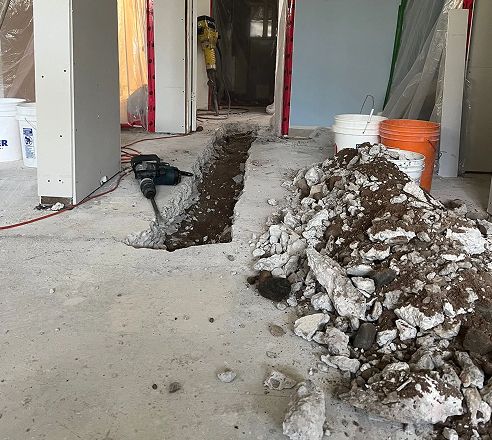
Utility disconnection should always be confirmed in person, not just assumed. Some properties also contain buried oil tanks, septic systems, or fuel storage units, which can leak hazardous substances into the ground. These must be professionally located and removed before any excavation begins.
Environmental site assessments can uncover underground threats early. When contamination is found, remediation planning must be built into the project timeline.
Why Hazard Checks Are Legally and Financially Necessary
Many hazardous materials found in older buildings are regulated at both provincial and federal levels in Canada. Demolishing a structure without properly identifying and addressing these materials isn’t just unsafe: it’s illegal.
Contractors and property owners can face major fines, shutdown orders, and even lawsuits if building demolition proceeds without certified hazard inspections and removal. Delays caused by surprise asbestos or lead paint discoveries can also inflate costs dramatically.
A proper survey protects your team, your timeline, and your budget. It also shows regulators, neighbours, and potential buyers that you’re committed to safety and accountability.
How MOD Demolition Manages Hazardous Site Conditions
At MOD Demolition, we treat hazard detection as a non-negotiable step in every project. Before any demolition begins, our team conducts a comprehensive inspection to identify threats like asbestos, lead paint, and mold. We work with certified specialists and environmental consultants to ensure full compliance with local and national safety regulations.
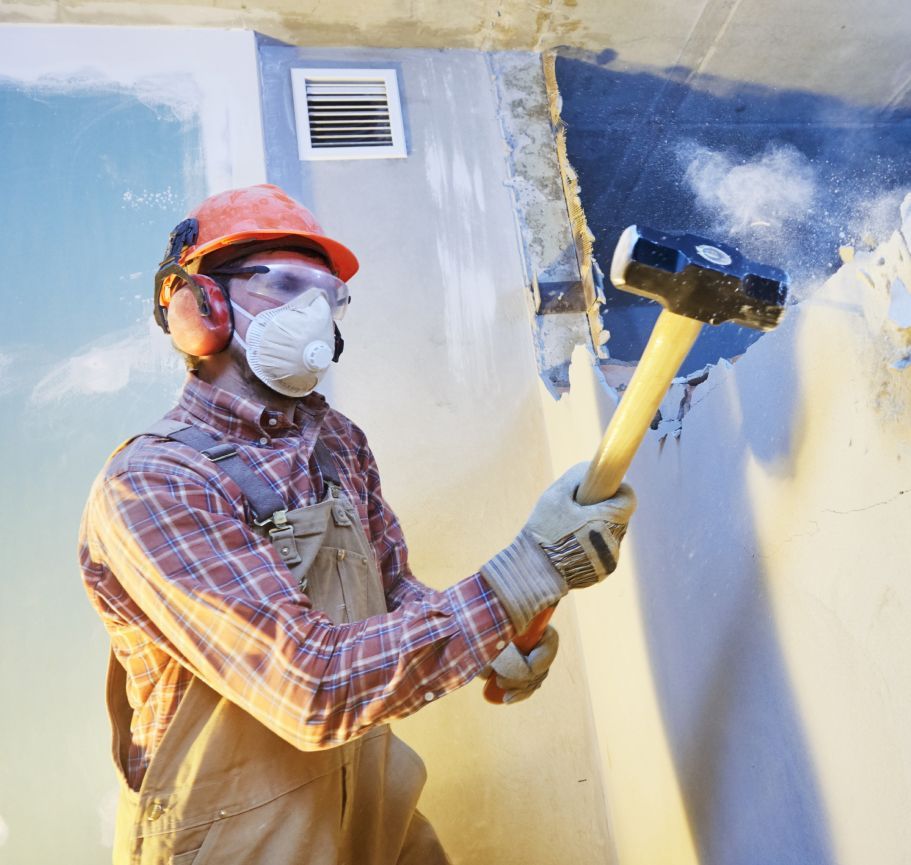
We’re also experienced in selective and manual demolition, allowing us to control dismantling in structurally compromised or hazardous environments. This reduces the risk of airborne contamination and improves safety across the job site.
From asbestos removal to lead paint mitigation, MOD Demolition has the tools, training, and expertise to handle even the most challenging site conditions.
Avoid Costly Delays: Inspect Before You Demolish
Before starting any building demolition, especially on an older property, take the time to inspect for hidden hazards. Materials like asbestos, lead paint, and mold are not only dangerous but heavily regulated. Overlooking them can derail your timeline and increase costs.
MOD Demolition offers detailed pre-demolition assessments and certified hazardous material removal services. We help you move forward safely, legally, and on schedule.
Reach out to MOD Demolition today at 249-449-0018, email us at connect@flemingcapitalgroup.ca, or click here to get in touch online.