




Manual vs. Machine Demolition: Which Demolition Method Is Right for Your Project?
Demolition is one of the first major decisions in a renovation, redevelopment, or construction project. The method used to remove a structure or interior area affects more than speed. It shapes site safety, project sequencing, equipment needs, and how much control you have over what stays and what goes.
For property owners, contractors, and project managers, the best choice is not always the fastest one. Some jobs need careful, targeted removal. Others call for heavy equipment and a faster path to site clearance. In this guide, we compare manual and mechanical demolition so you can better understand which approach fits your project.
How to Choose Between Manual and Mechanical Demolition Methods
Not every site calls for the same type of demolition. The structure itself, surrounding conditions, and project goals all influence the right path forward.
A useful decision starts with what the job actually requires. Some projects need precision and reduced disruption. Others depend on speed, access to heavy equipment, and the ability to remove large structural elements efficiently. Safety, control, and timeline all need to be weighed together.
What Is Manual Demolition?
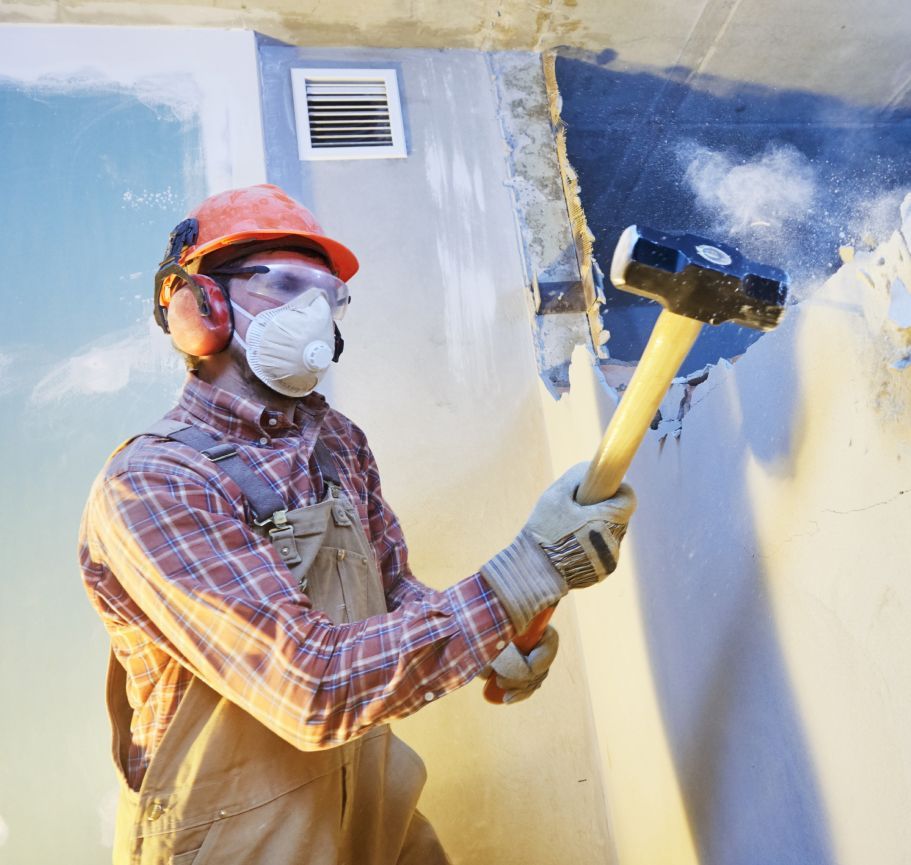
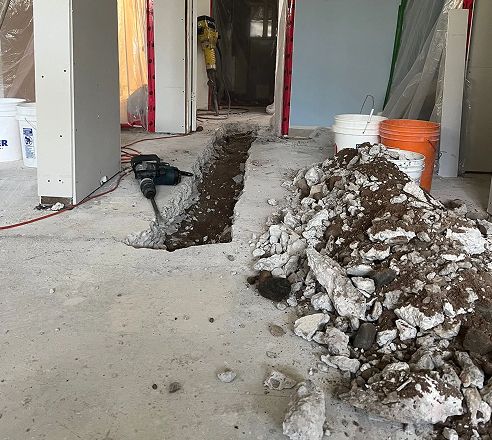
Manual demolition relies on hand tools and labour-intensive removal techniques rather than large machinery. Depending on the scope of the work, that can include hammers, pry bars, chisels, jackhammers, and other handheld equipment used to break down or strip out specific materials.
This method is often used for smaller-scale work, interior demolition, selective removal, or areas where crews need to preserve adjacent finishes or structural components. In more sensitive environments, manual demolition offers a higher degree of control because materials can be removed piece by piece instead of brought down all at once.
What Is Mechanical Demolition?
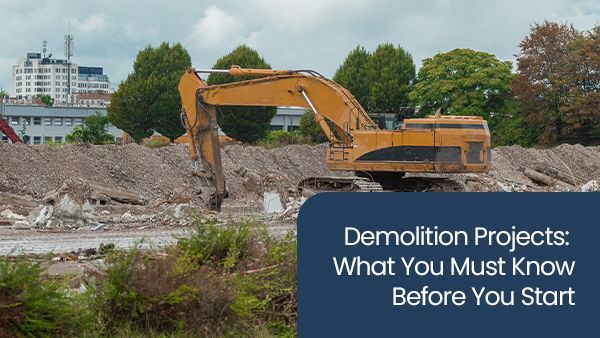
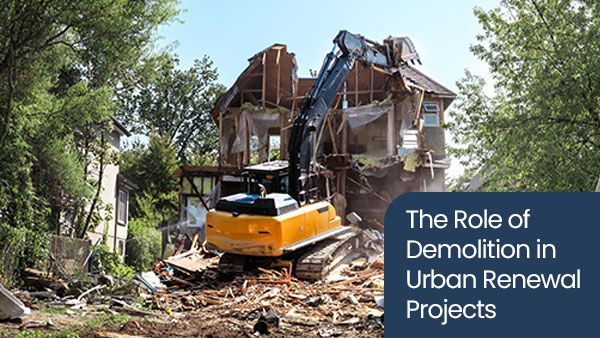
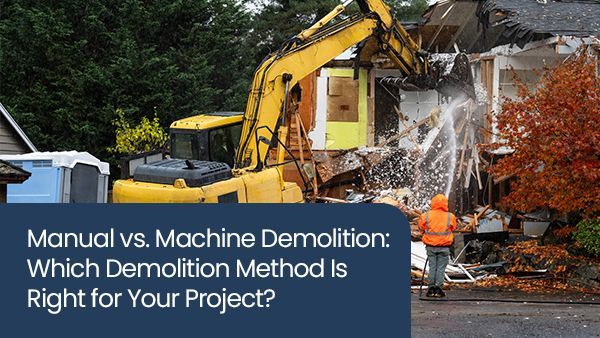
Mechanical demolition uses heavy machinery to take down structures or clear larger portions of a site. Excavators, bulldozers, skid steers, and other specialized equipment are commonly used when the scale of the project calls for more force and faster production.
This approach is generally better suited to full teardowns, structural demolition, and jobs where speed is a major priority. Mechanical demolition can handle larger volumes of material in less time, which often makes it the practical choice for bigger projects with tighter schedules.
Key Differences Between Manual and Mechanical Demolition
The main differences come down to control, speed, labour, and project scale. Manual demolition is slower and more hands-on, but it allows for careful removal in specific areas. Mechanical demolition covers more ground quickly, though it usually requires more space, larger equipment access, and a site that can safely support that kind of operation.
| Factor | Manual Demolition | Mechanical Demolition |
|---|---|---|
| Typical use | Interior, selective, smaller-scale work | Large-scale, structural, full teardown work |
| Speed | Slower | Faster |
| Precision | Higher control | Lower precision for detailed removal |
| Labour needs | More labour-intensive | More equipment-dependent |
| Access needs | Useful in tighter areas | Requires machinery access and operating space |
| Cost pattern | Can suit smaller targeted jobs | Often more efficient on larger projects |
The wrong fit can create problems. Using machinery where precise removal is needed may increase the risk of unnecessary damage. Using manual demolition on a large structural project can stretch labour costs and timeline beyond what the job can reasonably support.
When to Use Manual Demolition
Manual demolition is often the better choice for interior strip-outs, partial removals, heritage-related work, and spaces where surrounding materials need to remain intact. It is also useful when crews are working in tight access areas or occupied environments where large equipment is impractical.
Noise, vibration, and disruption can also shape the decision. On projects where nearby structures, finished areas, or active operations need extra protection, manual demolition may offer a more controlled way to move the work forward. That does not automatically make it simple, but it does make it better suited to jobs where accuracy matters more than raw speed.
When to Use Mechanical Demolition
Mechanical demolition is usually the stronger option for large structures, exterior teardowns, and site-clearing work that needs to move quickly. Where a project involves major structural elements, broad open access, and significant material removal, machinery can improve efficiency in a way manual methods cannot match.
This is often where mechanical demolition becomes more cost-effective as well. For larger jobs, equipment can reduce the time required on site and help keep the project on schedule. Full building teardown, slab removal, and bulk site preparation are common examples where a machine-led approach makes practical sense.
Factors That Influence Your Demolition Method Choice
Project size is one of the most obvious decision points, but it is far from the only one. Structural complexity, building condition, access limitations, and the amount of material being removed all affect the right approach. A simple open site creates very different options than a dense urban property with nearby buildings, utilities, or restricted entry points.
Budget and schedule matter too, though they should not be treated in isolation. A method that looks cheaper at first can create added labour, delays, or damage if it is not suited to the job. Environmental considerations, permit requirements, debris handling, and local regulations can also narrow the options before work even begins.
Safety Considerations for Each Demolition Method
Both manual demolition and mechanical demolition come with risk. Manual work exposes crews to repetitive strain, falling materials, sharp debris, and close-contact hazards. Machine demolition introduces heavy equipment movement, structural instability, visibility concerns, and larger impact zones.
That is why planning matters as much as the method itself. Proper site preparation, hazard assessment, protective equipment, and experienced crews are essential on either type of project. Compliance with safety requirements is not a final step added after the plan is made. It needs to be built into the demolition approach from the start.
Common Mistakes When Choosing Demolition Methods
One of the most common mistakes is choosing based on cost alone. A lower-looking price does not mean a method is right for the structure, site conditions, or timeline. What saves money on one project may create avoidable delays or damage on another.
Another mistake is treating demolition as a generic first phase rather than a specialized part of the build process. Structural conditions, access constraints, nearby infrastructure, and material separation all affect the plan. Bringing in professionals early helps avoid method mismatches that can ripple into the rest of the project.
Choosing the Right Demolition Methods for Your Project
The best demolition methods are the ones that match your structure, access conditions, timeline, and project goals, not the ones that sound fastest or cheapest in isolation. Manual work may be the better fit when control and selective removal matter most. Equipment-led demolition may be the right move when scale and speed drive the job. At MOD Demolition, we help clients plan demolition work with the right balance of safety, efficiency, and site-specific practicality.
Reach out to MOD Demolition today at 1-249-449-0018, email us at connect@flemingcapitalgroup.ca or click here to get in touch online.
Frequently Asked Questions About Demolition Methods
What are the main types of demolition methods?
The two main methods covered here are manual demolition and mechanical demolition. Some projects may also involve more specialized approaches, but these two are the most common starting points when comparing control, scale, and efficiency.
Is manual demolition cheaper than mechanical demolition?
Not always. Manual demolition may suit smaller or more targeted work, but it can become labour-heavy on larger projects. Mechanical demolition often carries equipment costs, yet it may be more efficient overall when the scale of the job is larger.
Which demolition method is safer?
Neither method is automatically safer in every situation. Safety depends on proper planning, trained professionals, site conditions, and whether the chosen method actually fits the structure and scope of work.
How long does demolition take?
Mechanical demolition is usually faster, especially on larger structural jobs. Manual demolition often takes longer because materials are removed more selectively. Site access, permitting, complexity, and debris handling can all affect the timeline.
Can both demolition methods be used together?
Yes. Some projects use a hybrid approach. Manual demolition may be used for selective interior work or prep in sensitive areas, while mechanical demolition handles larger structural removal or final site clearing.